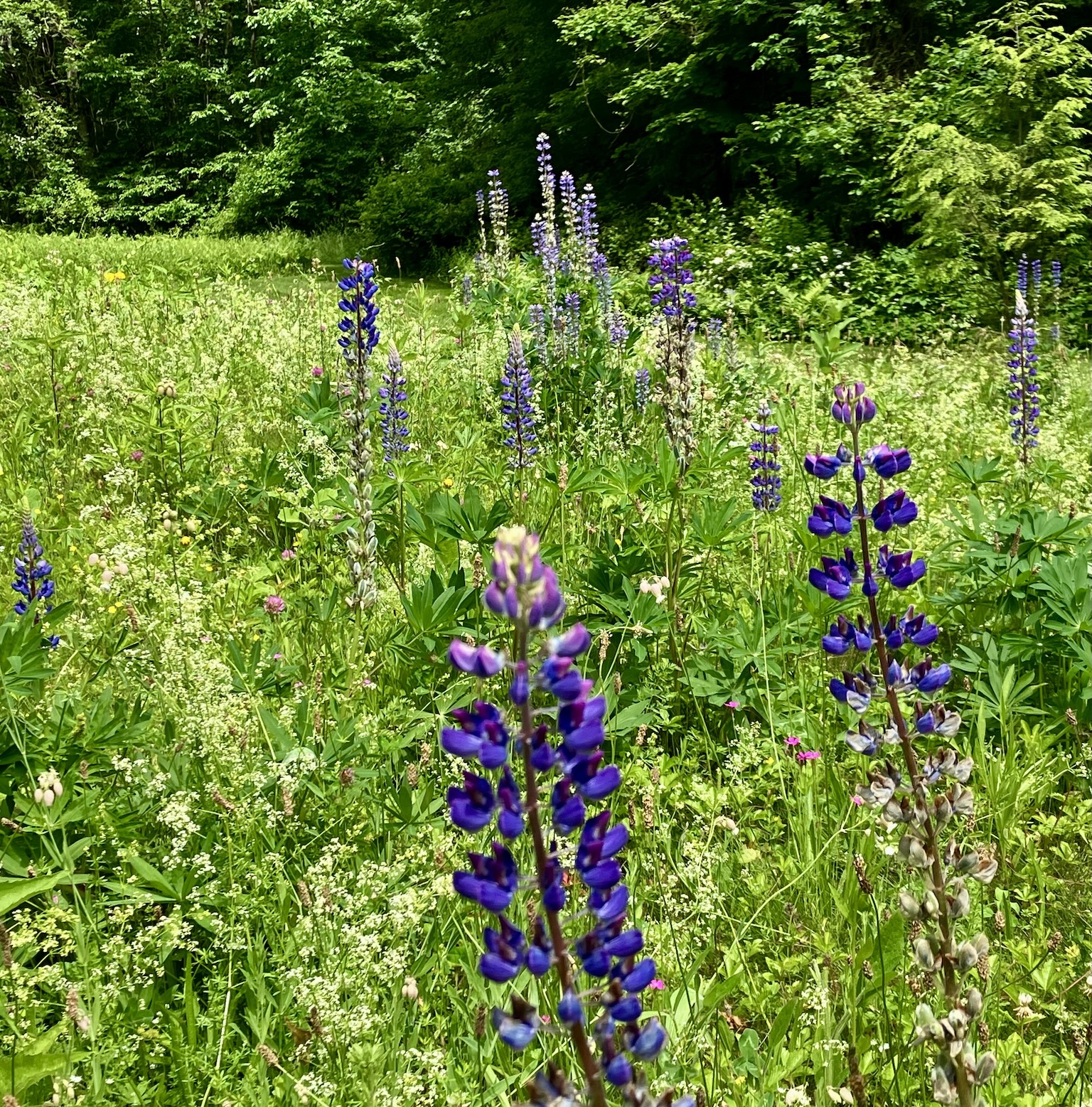
 I tried for years to grow lupines (or lupins or bluebonnets) in one of my garden beds. I chose a sunny spot with moist, well-drained soil which I read they preferred, but they weren’t happy there. One or two of them would come back in the spring, but they were sad spindly things and would collapse within a few weeks. Finally, fed up, I pulled them out and tossed them into my wild flower field where most of my failed botanical experiments go to die.
Except they didn’t die. In fact, the next spring a couple of plants took root – they spread by seed – and shot up 3 feet in the air, their stalks covered in soft deep blue flowers. This, despite the rocky and dry terrain. The next year, several more had taken hold. This, without any of the recommended deadheading and fertilizer. The lupines have spread across the entire field since – strong and upright – a small, seemingly unstoppable army, dressed in parade blue. The bees and butterflies love them and, at night, the fireflies drift above their gentle spires. They’ve found their place in life — despite all my best intentions.
Lupins
Seamus Heaney
They stood. And stood for something. Just by standing.
In waiting. Unavailable. But there
For sure. Sure and unbending.
Rose-fingered dawn’s and navy midnight’s flower.
Seed packets to begin with, pink and azure,
Sifting lightness and small jittery promise:
Lupin spires, erotics of the future,
Lip-brush of the blue and earth’s deep purchase.
O pastel turrets, pods and tapering stalks
That stood their ground for all our summer wending
And even when they blanched would never balk.
And none of this surpassed our understanding.

They found their place. Resilient and undaunted.
I enjoy their beauty here in Maine.
Thanks for writing, Cheryl!
I have been given the joy of having lupines of all colors. I have tried to give people starts but without success. I treat them much like I treat irises. Basically ignoring them. Just leaving them to their own life. They grow in plain old soil on the due south side of my spouse’s garage. The whole side of garage is windows—building is “heated” passively solar. I m happy for you to have lupines. Have you read “Miss Rumphous” (sp?). A wonderful story. I am grateful for the beauty they bring to the world. (I live 6 miles from WV in the western part of Shenandoah Valley of VA).
I think you’re right that they can stand — and might even prefer — plain old soil with lots of sun. They’re in their glory right now in the Berkshires. I will look for “Miss Rumphous”; thank you for recommending it.
I was able to find the absolutely delightful Miss Rumphous. A balm for all that ails us.Thank you!
The book I mentioned is Miss Rumphius byBarbara Cooney, published in 1982. I hope you enjoy the book if you already know it or find a copy to read
I love this. Thanks Liza!
I’m afraid the purply blue is starting to fade — but the spires will remain proud and upright all summer!
In Florida my yard would be a complete failure without the bees and butterflies making sure certain plants get “moved” to a better location…
They are busy little guys, aren’t they?