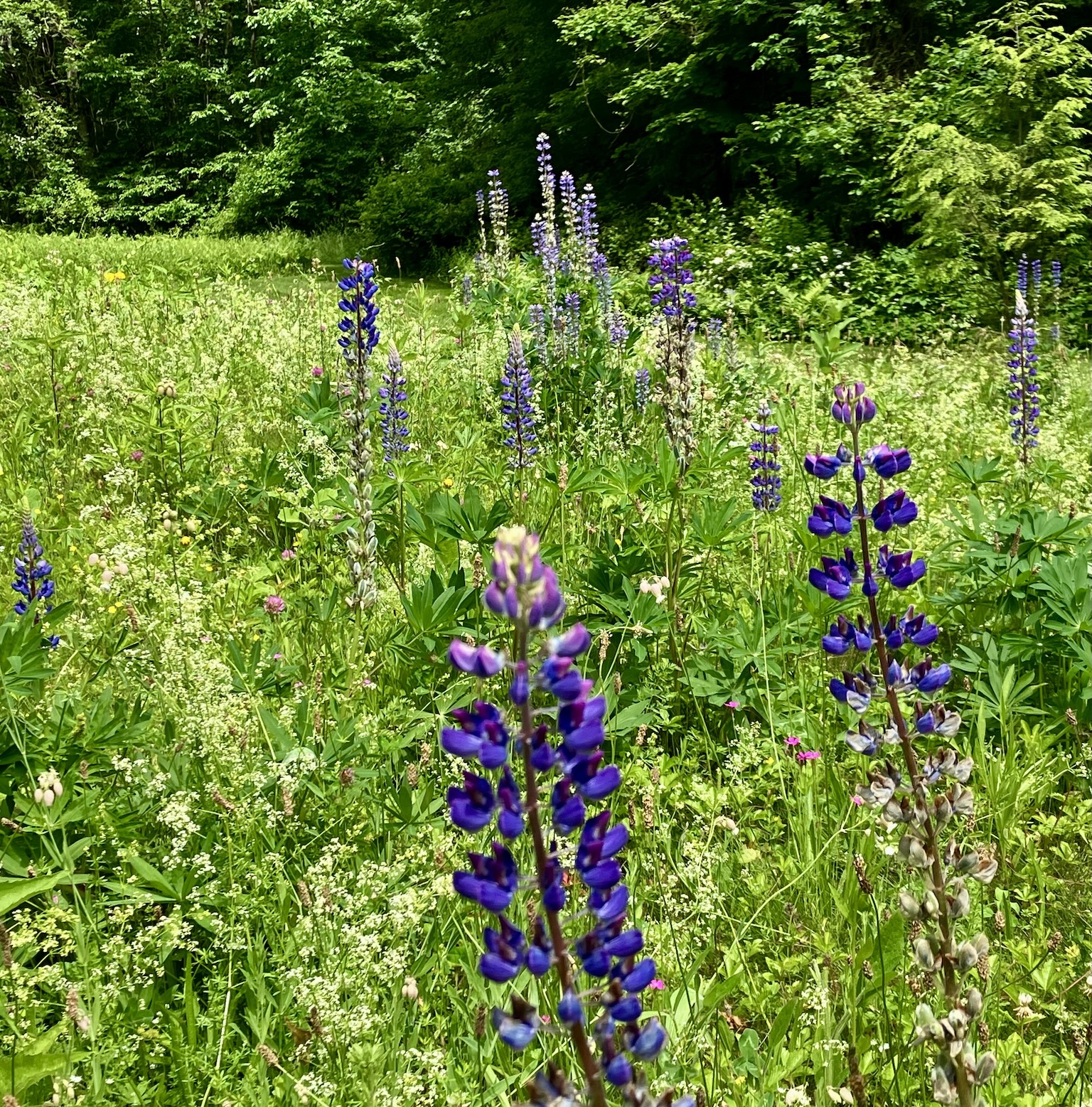
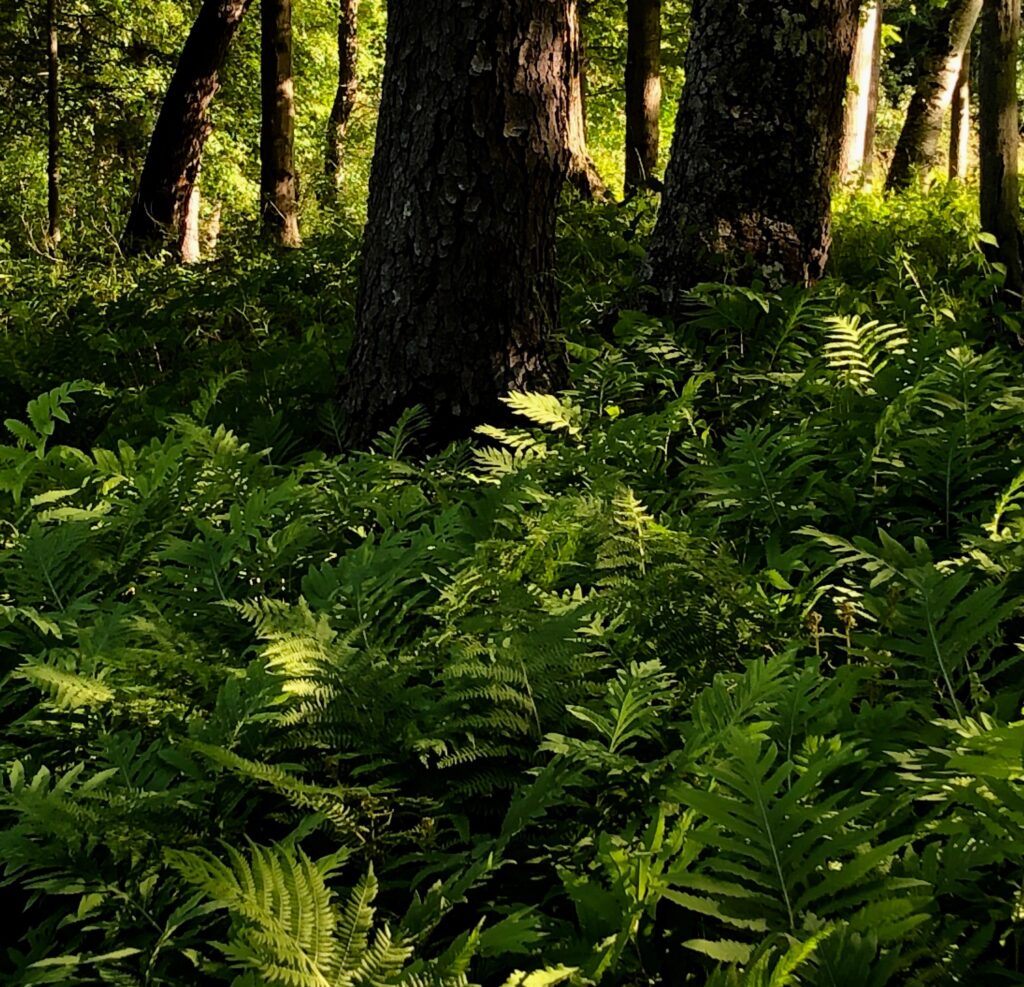
 When I’m hot and tired after working in the garden, I’ll walk up into the woods to commune with the ferns and moss that carpet the forest floor. Cool and fresh-looking on even the most oppressive days, they exude a zen-like calm. Perhaps that’s because they’ve survived on earth for so long, with some estimates putting them at nearly 300 million years old. Their secret? Ferns and moss are self-sufficient. They don’t rely on roots for their water and nutrients, instead absorbing both directly through their leaves and rhizoids. They’re unlike other plants, too, in that they reproduce by releasing spores into the air. A single cell surrounded by a thick membrane, a spore contains both male and female reproductive organs which allows the plant to essentially clone itself. Recently, I’ve noticed how these most mysterious and ancient of living things are spreading a little farther every year, colonizing wide swaths of shady undergrowth. I suspect they’ll outlast us all. I hope so. I can’t think of a better ending to the Anthropocene than a world carpeted in their luminous green beauty.
Here’s a poem by David Waggoner, whose work shows the influence of his teacher and mentor Theodore Roethke, that takes us into the heart of the subject.
On the Forest Floor
By David Waggoner
In this green shade, over the leaves and rubble
Of the fallen and still falling, over branches
And tangles of tree roots, over whole stones
And whole nurse logs, beneath the arches
Of ferns and the grottoes of deadfalls,
The moss has spread and deepened an underworld.
You kneel here naturally, and the air around you
Yields to your touch like moss, as the moss itself
Will yield to snow and ice through winter
To return as what it was,
And the green air you breathe is yielding to rain
Softer than moss, suspended like a cloud.
And moss – the only living substance here
For which a speck of sky after the death
Of a leaf is not an oracular emptiness –
The cold before the cold –
Has no need to fall. It was born fallen
And live in its own light, by its own light.
The closer you look at it, the more it changes
To the landscapes of the earth,
The yet-to-be and the dead and the newly risen
Merged into rootless lives whose entrances,
Like your lost eyes, become what enters them,
Where all that endures is your bewilderment.

Have you read Moss by Robin Wall Kimmerer? It is a little treasure, her book Braiding Sweetgrass is another, ‘ Indigenous wisdom, Scientific Knowledge, and the Teachings of Plants’. Sharon Magruder introduced me to your writings and i am glad to be signed up to receive them and enjoy them, thanks
Thank you for writing, Isabeth, and for recommending Robin Wall Kimmmerer’s books which I will gratefully explore further. I’m glad you’ve signed on!
Absolutely Liza – Love the ferns and the moss!!!
Margie
And you live in fern heaven!
Moss… thank you Lisa for this post. You have deepened my appreciation.
Thank you, Holly!
Lovely piece Liza and lovely poem to go with.
Thanks Patty. I particularly admired: “Has no need to fall. It was born fallen.
And live in its own light, by its own light.” I wasn’t surprised to learn about Waggoner’s deep ties to and appreciation of Roethke.
This beautiful piece arrives at just the right time for us. We’ve been getting more and more fascinated by the dynamics of the forest as we travel this year to some of the most impressive forested stretches of the country. This adds a layer to our understanding we hadn’t realized. The floor of nature’s masterpiece. So much to think about here.
Yes, the closer you look, the more you see. Thanks!
Did you know?: ❤️
httpss://www.smithsonianmag.com/science-nature/how-humble-moss-helped-heal-wounds-thousands-WWI-180963081/
This article on the healing power of moss is fascinating, Leslie. How like you to know about it — and share the news. Thank you for sending it on!